Left-Handed Darter Like a Regular Darter: Embroidery Review
First Impressions of a Playful Graphic
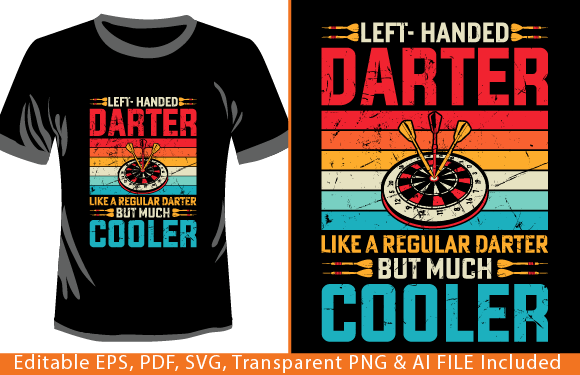
The moment I opened the file, I understood the appeal. The Left-Handed Darter Like a Regular Darter design doesn’t try to be overly complex or trendy in a fleeting way. Instead it leans into a specific, playful identity. The shape language feels familiar—a classic darter silhouette—but the left-handed twist and the almost cheeky “much cooler” phrasing gives it instant personality. I could already picture it stitched onto a heavyweight tote bag or across the back of a soft sweatshirt.
When you scroll through endless T-Shirt Designs and Graphics, finding one with an authentic, conversational tone is surprisingly rare. This asset feels less like a generic template and more like an inside nod for a niche audience. Darter enthusiasts, left-handers, or anyone who enjoys a subtle, dry joke on their apparel will absolutely gravitate toward it. The linework is deliberately clean, which from an embroidery standpoint is a huge advantage. No unnecessary tiny clutter that will turn into a muddy mess under thread.
Mood and Visual Personality
The mood is casual confidence. The design’s text element isn’t shouting—it’s more of a muttered truth. Visually, the darter illustration suggests motion and accuracy, while the left-handed orientation adds character without being visually jarring. You could easily see this working in a group of handmade products at a craft fair. Its personality doesn’t demand loud colors; in fact, a single thread color against natural fabric might be its strongest look.
Because the subject matter is so specific, it also creates a sense of community. A customer who spots this on a cap or a baby onesie will likely chuckle or want to strike up a conversation. In terms of brand consistency, that’s a quiet superpower. A small shop owner can use this design to signal that their brand has a sense of humor and an eye for niche references.
Translating the Design into Embroidery
Now, this is where the designer brain kicks into high gear. The Left-Handed Darter Like a Regular Darter graphic is rooted in the T-Shirt Designs category, but treating it as a potential machine embroidery design takes some evaluation. The line-based illustration likely digitizes well into a mix of running stitch and satin stitch, provided the artwork is at a usable resolution. I wouldn’t drop this into a hoop file without testing. The minimal shading and clear outlines are promising—they suggest smooth needle movement without constant trims.
I’d want to examine the stitch density on any filled areas. If the original graphic carries heavy color blocks, those need to be translated thoughtfully. A fill stitch that’s too dense will pucker on a lightweight knit, while too open will show the fabric through and weaken the visual punch. But given the subject, I suspect the artwork leans mostly on crisp outlines, which makes the embroidery adaptation simpler. If you are purchasing the file as a ready-to-stitch machine embroidery design, confirm the file format and hoop size before anything else.
Where This Design Shines on Real Products
In my studio, I mentally run every new asset through a “where would I put this” filter. For Left-Handed Darter Like a Regular Darter, the list is longer than I expected.
- Sweatshirt embroidery: Centered on the chest or across the upper back. The scale needs to be large enough to keep small details legible, but the straightforward composition handles that well.
- Tote bag design: A sturdy canvas tote with the design stitched in a contrasting thread color feels like an instant gift.
- Embroidered patch: Stitch it on felt or twill with a merrowed edge. A patch version of this darter would sit wonderfully on a jacket or backpack, tapping into the playful patch-trading culture.
- Cap or hat: The left-facing orientation of the darter would work brilliantly on the front panel of a cap, with the text perhaps wrapping the side.
- Personalized gift: A kitchen towel for a dad who loves darts, a pillow cover for a game room, or a custom apron. The design’s specific theme turns a generic item into something that feels almost commissioned.
- Baby clothes: A tiny onesie with this on it—maybe in a soft gray thread—is an unexpected, funny baby shower gift. The humor comes from the contrast.
Products You Might Want to Skip
No design is universal, and that’s okay. I would approach these applications cautiously.
- Small hoop sizes: If you’re forced to shrink the design below 3 inches, the text may become unreadable and the darter’s fine tip could blur. It needs some breathing room.
- Extremely textured or stretchy fabrics: A thick terry cloth or an ultra-thin rayon jersey can distort the crisp lines. You’d need top-notch stabilizer and testing to make it work without a headache.
- Dense stitch areas on thin garments: If the digital embroidery file hasn’t been optimized, you might end up with a stiff, uncomfortable patch on a lightweight tee. Remember, this is a Graphics file originally—so check the digitized output.
- Products that demand frequent harsh washing: A delicate satin stitch on a gym towel might not hold up over time. Choose durable thread and proper backing if the finished product will take a beating.
A Real-World Scenario: Embroidering a Custom Gift
Let me paint the picture. A regular client, a small business owner who sells handmade gifts, reached out. She needed something unique for a dart league’s end-of-season awards. A plain mug wasn’t going to cut it. She wanted a collection of embroidered zipper pouches, each with a darter graphic on the front. When I showed her the Left-Handed Darter Like a Regular Darter preview, she immediately smiled. That’s the reaction you chase. We decided to stitch it in a deep forest green thread on natural linen pouches. Because the graphic’s personality is so distinct, the product felt custom without requiring multiple design hours.
I tested the digitized version first on scrap linen. The running stitch outline around the darter was steady, the small text block needed a slightly reduced density to avoid puckering, and we used a medium-weight cutaway stabilizer. Once I confirmed the stitch-out, we produced ten pouches. The feedback from the dart league was pure delight—some players even requested left-handed versions for themselves, completely missing the joke but loving the feel of the graphic. That’s when I knew this asset had something beyond the obvious.
Practical Tips Before You Stitch
Before you load this design onto your machine, I’d recommend a few steps that I follow every time.
- Always test on scrap fabric: Match the fabric type and weight you’ll use in the final product. Thread color and tension behave differently on canvas versus jersey.
- Check thread color contrast: A dark gray design on a black hoodie will vanish. Test in black and white mockups first—it reveals contrast issues immediately.
- Review hoop size honestly: If your machine can only handle a 4x4 hoop, measure the design carefully. The “Much Cooler” text needs space to remain readable.
- Use proper stabilizer for the fabric: Knit fabrics demand a cutaway; woven goods can often handle tear-away. Don’t let the design’s simplicity trick you into skipping backing.
- Inspect small details: If you’re using a purchased embroidery file, look at the stitch preview. The left-handed darter’s slim body and text might need a sew-out check to avoid thread breaks.
- Consider licensing: Since this design is part of a Graphics and T-Shirt Designs collection, always confirm the terms. Can you sell finished items commercially? Can you share the digital embroidery file? Clarify before listing anything.
Who This Design Serves Best
The Left-Handed Darter Like a Regular Darter isn’t for every shop or every maker. But for the right audience, it’s gold. Embroidery designers who cater to niche hobbies, dart bars, game rooms, or humorous gift buyers will see the most return. Etsy sellers who build their stores around personalized, funny, or conversation-starting products can build a small collection around this theme. Craft businesses that offer custom apparel for local leagues or pubs will find it an easy upsell.
Hobbyists who enjoy making gifts for family and friends will also appreciate how little effort it takes to turn a sweatshirt into something memorable. The design is simple enough to not intimidate a beginner, yet distinctive enough that a professional can elevate it with thread choice, placement, and packaging.
Final Thoughts on Selling Finished Pieces
If you plan to produce finished products using this design, think about presentation. An embroidered tote with this darter wrapped in tissue paper and a small hangtag describing the “much cooler” left-handed joke becomes more than an accessory—it’s a small experience. Buyer engagement depends heavily on context. A listing that explains the design and shows it on a real model will always outperform a flat mockup alone.
The Left-Handed Darter Like a Regular Darter brings genuine personality to the table without requiring a complicated stitch-out. It fits easily into a maker’s lineup of crafts, personalized gifts, and small shop merchandise. As long as you do the groundwork—testing, digitizing thoughtfully, checking fabric compatibility—it can become a dependable addition to your commercial embroidery projects. It’s one of those rare designs that makes people feel seen, and in the handmade product world, that connection is everything.