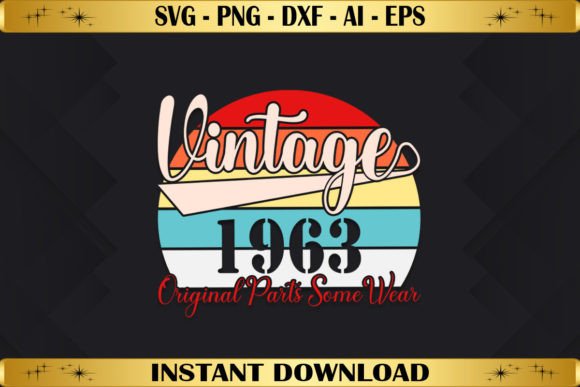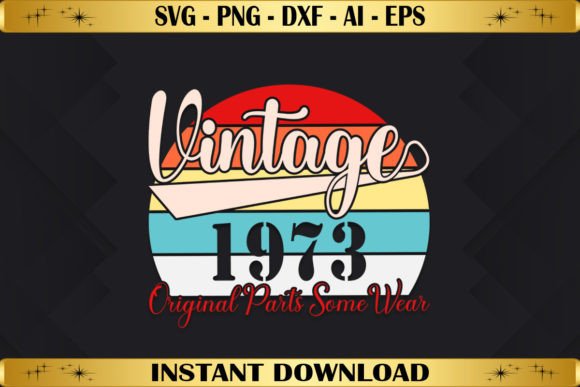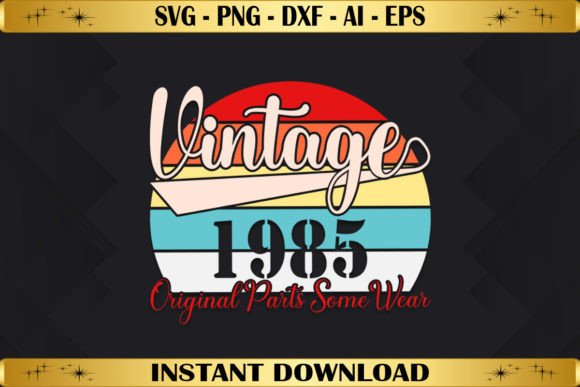
Vintage 1985 Original Parts Some Wear T-Shirt Graphics
When a design asset lands on my desktop for testing, the first thing I notice is whether it tells a story before I even open the file. Vintage 1985 Original Parts Some Wear does exactly that. The name itself sets a mood: nostalgic, slightly worn, proudly seasoned. It speaks to anyone who appreciates the charm of something built to last, something that carries its years with character rather than apology. For a digital product creator planning a new collection around retro automotive themes, birthday milestone designs, or garage-inspired merchandise, this asset immediately suggests a clear niche direction.
The visual personality leans into a weathered, honest aesthetic. This is not a polished modern graphic. It belongs on a faded t-shirt, a workshop wall print, or a mug held by someone who still turns a wrench on weekends. The target buyer likely appreciates vintage trucks, classic cars, dad humor, milestone birthdays, or the kind of blue-collar pride that resonates across generations. From a selling perspective, that narrows the audience in a useful way: you are not shouting into a crowded marketplace. You are speaking directly to someone who sees the phrase "Original Parts Some Wear" and feels seen.
First Look at the Files and Format Variety
Unzipping the compressed folder, I found exactly what the product description promised. The bundle includes an SVG file, a PNG file, a DXF file, an AI file, and an EPS file. This spread of formats matters more than newcomers might realize. The SVG and DXF serve Cricut and Silhouette users who need clean cut lines for vinyl projects. The PNG provides a ready-to-use image with transparency for quick mockup placement or sublimation printing. The AI and EPS files give designers full editing control in Adobe Illustrator or CorelDRAW. When I prepare a digital download product for Etsy or Creative Fabrica, having all five formats means I can market the same asset to crafters, print-on-demand sellers, and professional designers simultaneously without additional conversion work.
File organization was straightforward. Everything extracted cleanly, and the PNG opened with a transparent background as expected. For sellers who bundle multiple designs into a single listing, clean file naming and logical folder structure build customer trust. I recommend renaming files to include your shop name or a consistent prefix before delivering to buyers. Small touches like that reduce confusion and support tickets later.
Testing Across Product Mockups Before Publishing
Before listing any graphic design asset for sale, I run it through a series of mockup scenarios. This practice reveals whether the design holds up across different product types, printing methods, and viewing contexts. For Vintage 1985 Original Parts Some Wear, the testing process was revealing in mostly positive directions.
On a heather charcoal t-shirt mockup, the design looked genuinely at home. The weathered lettering style blended naturally with the fabric texture, and the message felt authentic rather than forced. On a white ceramic mug, the contrast was sharper, and the vintage character stood out prominently. I also tested it as a printable wall art piece in a simple black frame, and the result felt like something you might find in a roadside diner or a restored garage lounge. Each application reinforced the same brand identity, which matters when you are building a cohesive product collection rather than a random assortment of unrelated graphics.
Where the Design Performs Strongest
Through testing, I identified several high-confidence applications for this asset. The distressed typography and balanced composition make it particularly effective for unisex apparel, including t-shirts, hoodies, and raglans. The design also translates well to tote bags, canvas prints, and workshop signage. For print-on-demand sellers using platforms like Printful or Printify, the PNG file drops directly onto product templates with minimal adjustment needed. Sublimation designers will appreciate the clean edges when pressing onto tumblers or mugs, though color testing on your specific substrate is always advisable.
Digital download shops can package this as part of a larger vintage automotive bundle, a milestone birthday collection, or a retro dad-themed design pack. The more specific your bundle theme, the higher the perceived value for buyers who recognize themselves in the niche. A single design like this might sell for a few dollars individually, but inside a curated pack of ten complementary retro graphics, the bundle price can command significantly more while still feeling like a deal to the customer.
Where Careful Judgment Is Required
No design asset works perfectly everywhere, and honest evaluation means acknowledging the limitations. This design carries a distressed texture intentionally, which means fine details may not translate well to extremely small products. If you plan to use it for one-inch buttons, tiny stickers, or miniature keychain inserts, the weathered edges could become muddy or illegible. I tested a scaled-down version on a sticker mockup at roughly two inches wide, and while the main text remained readable, the finer grain of the distress effect started to blur. For Cricut users cutting vinyl at small sizes, the SVG cut paths should be inspected closely. Complex distressing can create intricate cut lines that challenge less experienced machines or users.
Dark backgrounds also require caution. The design's vintage character depends partly on contrast, and placing it on a navy or black substrate may swallow details unless the text color is adjusted. Test the PNG on both light and dark mockup backgrounds before finalizing your listing images. If the file includes only one color version, be transparent about that in your product description so buyers can make informed decisions.
Marketplace Presentation and Thumbnail Strategy
Thumbnail appeal drives click-through rates on Etsy, Creative Fabrica, Design Bundles, and similar platforms. For a graphic like Vintage 1985 Original Parts Some Wear, the listing thumbnail should communicate the design's personality instantly. I prefer mockup images that show the design in context: a folded t-shirt with workshop tools in the background, or a framed print hanging on an exposed brick wall. Lifestyle mockups outperform plain white backgrounds for nostalgic and rustic designs because they help the buyer imagine the product in their own life.
Consider preparing at least three distinct listing images: a clean mockup showing the full design, a close-up detail shot highlighting the distressed texture, and a flat lay composition that suggests a lifestyle or gift scenario. This variety strengthens the visual story and keeps browsers engaged longer. When a potential buyer scrolls through multiple images instead of bouncing after the first, the platform algorithms tend to reward that listing with better visibility.
Pairing With Fonts and Complementary Assets
Building a brand collection around this design requires thoughtful pairing. The vintage industrial mood works beautifully alongside sturdy serif fonts for headers and clean sans serif fonts for supporting text. Script fonts with a hand-painted sign quality can echo the garage aesthetic without competing for attention. Handwritten fonts that mimic grease pencil or chalk add another layer of authenticity when used sparingly. Display fonts with bold slab serifs reinforce the automotive heritage and work well for companion designs in the same bundle.
If you are creating complementary graphics to sell alongside this one, consider variations on the theme: different model years, alternate phrasing like "Original Equipment" or "Vintage Edition," or companion designs featuring classic truck silhouettes, wrench illustrations, or retro badge shapes. Each additional asset deepens the collection and gives repeat buyers a reason to return to your shop.
Real Seller Workflow and Practical Notes
My production workflow for a new asset follows a consistent checklist, and I recommend the same approach. First, inspect every file format immediately after download. Open the SVG in your cutting software and check that cut lines are clean and separated properly. Open the AI or EPS file in your vector editor and confirm that text is outlined and layers are organized. Open the PNG and verify transparency, resolution, and edge quality. Catching file issues before listing saves painful customer service exchanges later.
Second, print a test page. Even if you primarily sell digital downloads, knowing how the design reproduces on paper builds your own confidence and helps you answer buyer questions accurately. Test on standard printer paper and on a higher-quality cardstock if you market printable wall art. Third, run the design through at least three product mockups that your target audience would realistically purchase. This shows you how the asset performs across your actual product line, not just in theory.
Licensing deserves explicit attention. Confirm that the commercial license attached to this asset permits the end products you intend to sell. Most standard commercial licenses for SVG and PNG designs allow finished physical products like printed shirts, mugs, and tote bags. Reselling the digital files themselves typically requires a separate extended license or is prohibited entirely. Read the license terms from the original creator, not just a summary. When in doubt, reach out to the designer directly. Protecting your shop from intellectual property disputes is worth the extra step.
Who Should Consider Adding This Asset
Based on my evaluation, Vintage 1985 Original Parts Some Wear fits well for several specific seller profiles. Print-on-demand shop owners building automotive or dad-themed apparel collections will find it ready to upload with minimal tweaking. Cricut crafters selling finished vinyl decals or heat-pressed shirts at markets and fairs can use the SVG immediately after confirming cut settings. Digital product creators assembling vintage bundles for Etsy or Creative Fabrica will appreciate the authentic distressed look that many similar assets overdo or underdeliver. Small business owners creating promotional merchandise for auto shops, restoration garages, or classic car events might find this design resonates perfectly with their existing customer base.
For content creators and bloggers in the automotive niche, the PNG file works as a blog graphic, social media post element, or giveaway item visual. The design's straightforward message also makes it suitable for greeting cards, birthday invitations, and milestone celebration products. A 40th birthday theme centered on being "vintage original parts" writes itself, and the graphic gives that concept an immediate visual anchor.
Final Assessment Before You List
Every design asset represents a decision point for a seller. Add it to your collection too hastily, and you risk diluting your brand. Overthink it, and you miss a window of market demand. Vintage 1985 Original Parts Some Wear earns its place in a shop that understands its audience: buyers who value craftsmanship, nostalgia, and a sense of humor about aging gracefully. The file package is complete, the format variety covers the major use cases, and the design aesthetic aligns clearly with proven merchandise categories.
Test it thoroughly on your own equipment, mock it up across your product range, pair it with complementary assets that strengthen your shop's theme, and write a listing description that matches the design's unpretentious voice. When those pieces align, a single well-chosen graphic design asset can anchor an entire product collection and attract buyers who keep coming back for more of what your brand represents.